Navigating to Zero - May 2026
05/27/26
|
AWO-OCIMF Partnership Update
|
|
AWO and the Oil Companies International Marine Forum are partnering to reduce fall-to-water risks and strengthen the use of human performance-influencing factors in maritime risk management programs.
Falls to Water: AWO is an active member of OCIMF's Falls to Water working group, which is developing guidance to reduce risks during personnel transfers, mooring, barge work, vessel access, and terminal operations. The group first met in February, plans to draft the publication by the end of 2026, and is targeting release in the third quarter of 2027. AWO is leading the barge work portion.
Human Factors: AWO is also engaged in OCIMF's Human Factors Committee, which helps integrate human factors principles across OCIMF programs, publications, advocacy, and working groups. HFC members serve as coaches to assigned groups on an ongoing basis. AWO joined the Tanker Management and Self-Assessment (TMSA) working group as an HFC coach in April and the group's first meeting is pending.
Schedule: As each OCIMF program or committee nears its scheduled update time, HFC coaches will be assigned and will work with the group until the update is complete. A draft schedule for program updates is below.
To be included in updates and help shape this work, request to join the AWO OCIMF Working Group (ABBA) by visiting the member portal, email workinggroups@americanwaterways.com or contact Michael Breslin.
|
|
AWO Celebrates Wear Your Life Jacket at Work Day
|
|
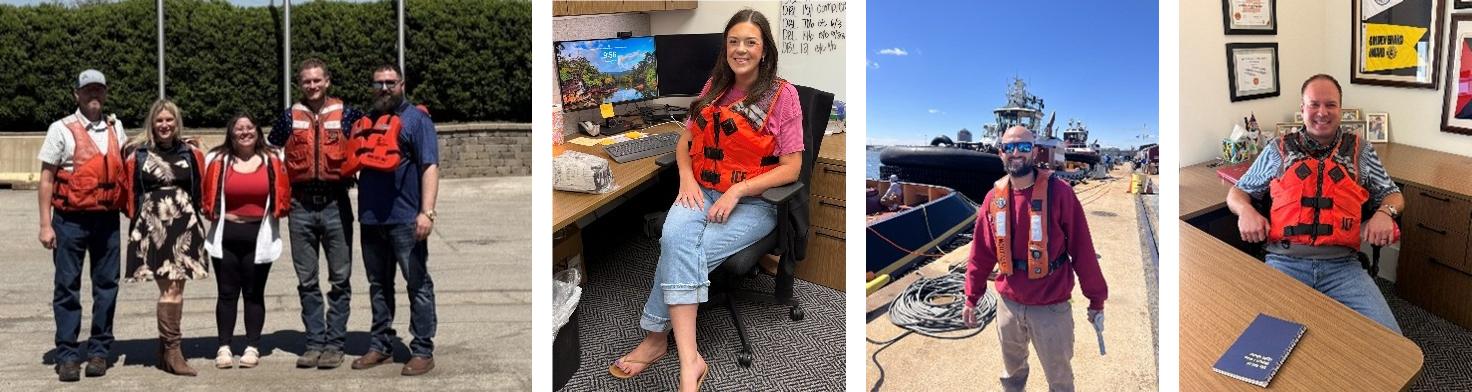
AWO members shared their pride in safety by supporting the National Safe Boating Council's annual "Wear Your Life Jacket at Work Day" campaign on May 15. Each year, the event highlights a simple message that saves lives: The best life jacket is the one you wear!
|
|
|
Wear Your Life Jacket at Work Day kicks off the National Safe Boating Council's Safe Boating Week, which provides an opportunity for all boaters to become more aware of safe boating practices that can save lives on the water. To join the campaign, check out AWO's social media posts and spread the word about boating safety!
|
|
El Nino Predicted to Increase Number of Pacific Storms this Hurricane Season
|
|
The Eastern Pacific hurricane season started on May 15 and the Central Pacific hurricane season begins on June 1. Both the Eastern and Central Pacific basins are expected to produce above the historical average number of named storms, hurricanes and major hurricanes in 2026.
"The Pacific is unusually warm, and that raises the stakes this season," AccuWeather lead hurricane expert Alex DaSilva said of the effects of El Nino. "That extra energy stored in the ocean can help storms strengthen faster, last longer and in some cases move farther north toward places like Baja California and far Southern California."
NOAA's 2026 hurricane outlook will be released on May 21. AccuWeather's predictions are provided below:
|
|
NHC Launches New Hurricane Products for 2026
|
|
The National Hurricane Center has announced several product and service updates for the 2026 hurricane season. Key changes include an operational cone graphic that displays inland tropical storm and hurricane watches and warnings; new storm surge watch and warning capabilities for Hawaii; a more mobile-friendly NHC website; updated tropical weather outlook symbols; and smaller 2026 forecast cones based on recent track-error data. NHC will also test an experimental cone using along-track and cross-track errors and offer new graphical marine wind warnings to support vessel routing and hazardous-weather decisions. More details are available in NHC's update.
|
|
AIHA Heat Stress App Helps Protect Workers
|
|
The American Industrial Hygiene Association (AIHA) is the association for occupational and environmental health and safety professionals focused on protecting workers and communities, and its Heat Stress App was featured in the National Safety Council's 2026 heat safety programming as a practical tool for preventing heat-related illness. The free app helps workers and managers assess heat risk using an adjusted Wet Bulb Globe Temperature calculation and recommended protective actions. AIHA notes that heat stress can result from high temperatures, physical exertion, poor ventilation, PPE, limited rest breaks, low fluid access, and lack of acclimatization. Workers and supervisors should use hydration, shade, rest breaks, cooling methods, self-pacing, acclimatization, and company procedures to reduce risk.
The free AIHA Heat Stress App can be downloaded on Android or Apple devices. For more information on AWO's ongoing work on heat-illness related regulation, please contact Lillie Wightman.
|
|
National Transportation Safety Board Marine Casualty Investigation Reports
|
|
The National Transportation Safety Board (NTSB) publishes investigation reports for marine, aviation, highway, railroad, pipeline, and hazardous materials incidents. Vessel incident reports released since the last edition of Navigating to Zero are summarized below.
On April 3, 2025, about 2145 local time, the offshore construction vessel Island Venture's crane was being used to lift a wire reel from the back deck of the offshore supply vessel C Enforcer in Bayou Lafourche, Port Fourchon, Louisiana, when the crane's hoisting wire parted, causing the reel to drop onto the main deck. There were no injuries, and no pollution was reported. Damage to the C Enforcer and Island Venture was estimated to be $3.8 million.
The NTSB found the probable cause of the failure of the hoisting wire on the offshore construction vessel Island Venture's crane was internal corrosion of the crane's hoisting wire.
On December 1, 2024, about 0352, the pipelayer Deep Energy was docked at the Millard Maritime facility, located in Theodore, Alabama, undergoing a maintenance period, when a fire started within one of the vessel's three crane cabins. The crew began fighting the fire and contacted the local fire department, who extinguished the fire. There were no injuries. The crane cabin on the Deep Energy sustained significant fire damage that was estimated at $1.8 million.
The NTSB determined that the probable cause of the fire within the knuckle boom crane cabin aboard the pipelayer Deep Energy was likely the result of an unknown malfunction of, or an electrical fault within, the refrigerator or its associated electrical receptacle.
On December 29, 2024, about 1934 local time, the towing vessel Patrick J Studdert and bulk carrier Clara B collided while underway on the Lower Mississippi River at mile 122, near Luling, Louisiana. The Patrick J Studdert sank, forcing all five crewmembers to abandon the vessel into the water. A sheen of diesel fuel was visible downriver. The crew of the Patrick J Studdert were rescued by a nearby vessel; four crewmembers sustained minor injuries. The Patrick J Studdert was considered a total constructive loss valued at over $2.3 million. The Clara B sustained minor damage to its hull, estimated at $250,000 to repair.
The NTSB determined that the probable cause of the collision between the bulk carrier Clara B and towing vessel Patrick J Studdert and subsequent sinking of the Patrick J Studdert was the Patrick J Studdert captain's distraction due to his cell phone use, which resulted in him not maintaining a proper lookout and navigating the towing vessel directly into the path of the upbound Clara B.
On May 15, 2024, about 0947 local time, the towing vessel LCPL Phillip C George was departing the Texas International Terminal, in Galveston, Texas, pushing two loaded tank barges, when the port quarter of the LCPL Phillip C George struck a terminal dolphin and one of the barges, MMLP 321, separated from the tow and contacted a power transmission pole and the Pelican Island Bridge in the Galveston Channel. There were no injuries, and about 20,000 gallons of vacuum gas oil was released into the waterway. Damage to the MMLP 321 and the Pelican Island Bridge, salvage operations, the value of the lost cargo, and the cost of the oil spill response was estimated at $8.4 million.
The NTSB determined that the probable cause of the contact of the LCPL Phillip C George tow with a terminal dolphin, a power transmission pole, and the Pelican Island Bridge was the captain not being able to overcome the effect of the tidal current, which was stronger than predicted, as the strung-out tow exited the protection of the terminal breakwater and entered the channel.
On June 15, 2024, about 1626 local time, the towing vessel Mackenzie Rose was pushing the loaded deck barge Weeks 281 while transiting the southern branch of the Elizabeth River in Chesapeake, Virginia, when the barge's raked bow struck the Norfolk and Portsmouth Belt Line Railroad Bridge. There were no injuries, and no pollution was reported. The railroad bridge was severely damaged; total damages were $15.8 million.
The NTSB determined that the probable cause of the contact of the Mackenzie Rose tow with the Norfolk and Portsmouth Belt Line Railroad Bridge was a loss of control of the tow by the mate at the helm, possibly due to his error in switching from autopilot to hand steering or impairment by fatigue.
|
|
Coast Guard and Bureau of Safety and Environmental Enforcement Safety Alerts
|
|
The U.S. Coast Guard and the Bureau of Safety and Environmental Enforcement publish Safety Alerts on their websites on a regular basis. Alerts issued since last publication of the NTZ are listed below:
Stakeholders are urged to review these alerts in detail to enhance safety measures and prevent incidents. Please contact Michael Breslin for more information.
|
|
AWO High-Value Near Misses for May
|
|
AWO's High-Value Near Miss Program seeks to prevent incidents by sharing lessons learned. In addition, AWO's Tankering and Barge Operations Subcommittee has established the Terminal Near Miss Program, which investigates near misses at terminals. Both are entered using the same form. Events involving bridges may be recorded using AWO's Bridge Event Reporting Form.
|
|
|
|
Coast Guard Reports of Investigation and Findings of Concern
|
|
The U.S. Coast Guard offers a monthly email to alert stakeholders about new Reports of Investigation and Findings of Concern, published on its Office of Investigations & Casualty Analysis website. To request alerts, email HQS-SMB-CG-INV@uscg.mil.
Stakeholders are urged to register for email alerts and check the Coast Guard's Office of Investigations & Casualty Analysis website often for new information, alerts, and details that may enhance safety measures and prevent incidents. Please contact Michael Breslin for more information.
|
|||||||||||||||||||||
|
Safety Leader Focus: Mike Blaske
|
|
|
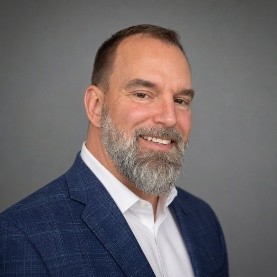
Michael Blaske was appointed General Manager of Illinois Marine Towing (IMT), a Canal Barge Company subsidiary, in 2020, where he oversees operations, contract management, safety, and financial performance for the company's fleeting, waterline support, and cargo delivery services. Mr. Blaske began his maritime career as a deckhand for his father's company, Blaske Marine, on the Missouri River. After joining IMT, he advanced through vessel operations, logistics, and marine superintendent roles, earning his pilot's license and building strong industry relationships along the way. Mr. Blaske continues to hold a Master of Western Rivers License and serves on AWO's Board of Directors, as Chair of the Illinois River Carriers Association, and on the Corporate Advisory Board for Corn Belt Ports.
|
|
We are nearing the halfway mark of this year in just a few weeks. How was the first half for IMT, and what safety initiatives you are working on in the second half of 2026?
|
|
IMT has had a successful first half of the year, and we plan to continue building on that momentum as we move through the next six months. One of the biggest drivers behind our success has been the commitment our management team brings to supporting our people and the courage our employees show in caring for their fellow coworkers and industry partners every day. We empower our teams to identify, address, and correct safety concerns they encounter onboard or in the field so hazards can be resolved before they lead to an injury or incident -- real-time risk management, if you will. In the second half of the year, I will continue to support my teammates to ensure our culture of ownership and accountability continues to move us closer to GOAL ZERO.
|
|
Focusing on your Illinois Marine Terminal and its shipyard operations, what are the highest-risk hazards or incident trends keeping your team's attention this year, and how are you working to get ahead of them?
|
|
Our shipyard team is constantly looking for opportunities to improve hazard identification and overall safety performance. Slips, trips, and falls continue to be a major area of focus due to the nature of our work environments, changing conditions, and exposure to heights. Because these risks are part of our employees' daily work, the conversations around STF prevention are highly relatable and meaningful.
One of our major initiatives for the remainder of the year is reducing reliance on traditional scaffolding where possible. We have already begun purchasing and implementing mobile stair units similar to those used at airports. In addition, we are fabricating additional units for use at our Dry Barge Cleaning facility. By putting these systems in place, Illinois Marine Terminal is improving safe access and egress to the barges in our yard while also increasing operational efficiency.
|
|
You have been highly successful in your career! Can you share how you came to work in the marine industry and any advice you have for someone considering a career in maritime transportation?
|
|
I came into the marine industry through my family as a fourth-generation Blaske involved in maritime transportation. I joined the family business in my early 20s as a deckhand for Blaske Marine. Later, I moved to Chicago and continued to grow my career with Illinois Marine Towing. After gaining experience and sea time, I pushed myself to become a licensed wheelman, and when an opportunity opened in the logistics office, I applied and landed the job, providing the opportunity for me to come shoreside.
The best advice I can give comes in two parts. First, for anyone considering a career in maritime, do it. There are countless different career paths to explore and discover what interests you most. Second, pursue your interests intentionally and stay committed to improving both yourself and the industry. Be open to new challenges and change and remember that patience and persistence go a long way in the maritime industry. The opportunities are endless if you are willing to put in the work!
|
|
American Waterways HERO Award - Nominate Your Crew for Heroic Acts
|
|

|
The American Waterways Honor & Excellence in Rescue Operations (HERO) Award honors member company employees for their bravery, skill, and selflessness during emergencies on our waterways. Qualifying acts include rescuing mariners, responding to medical emergencies, recovering overboard individuals, and other heroic actions. To nominate your crew's efforts, fill out this simple form on the AWO website. Each event is recognized with a certificate of recognition for the vessel, a HERO Award Coin for each mariner, and a complimentary one-year marine license and liability insurance policy for offered by 360 Coverage Pros & Berkley Offshore. Please send in your nominees before June 30.
|
||||||||
|
Li-Ion Battery Risks for Vessels in Focus at Maritime Safety Events in 2026
|
|
At the National Harbor Safety Committee meeting in March, firefighters from across the country discussed a disturbing rise in vessel fires caused by the proliferation of Lithium-Ion battery-powered vehicles and devices on ships, ferries, and other vessels. The San Francisco Fire Department described their growing concern over the number of e-bikes carted onto the ferry that shuttles tourists across the Bay in the shadow of the Golden Gate Bridge, while another discussion focused on the risk illustrated by the sinking of the Morning Midas, a car carrier left to burn until it sank near the Aleutian Islands after an electric vehicle caught fire during transport.
From yachts to towing vessels, the immense number of Li-Ion batteries integrated into modern cars, tools, devices, and vehicles is leading to a growing number of fire hazards in the maritime industry. Safety-focused organizations, including AWO and the U.S. Transportation Research Board (TRB), are taking steps to educate the maritime industry about these risks as effective mitigation techniques are studied by insurers and engineers.
AWO will present on hazard identification, training programs, and prevention at the upcoming IMX conference on May 28 with a panel led by Kelly Teichman, Executive Chairman of T&T Group, and featuring AWO, Corvus Energy, ABS, and AEU. The TRB has also kicked off two working groups that will develop materials for presentations on the specific risks for ferries and car carriers at its January 2027 Conference. For more information, please contact Michael Breslin.
|
|
AWO's Summer Safety Meeting is July 21-22 - Register Today!
|
|
Join AWO members this summer in Chicago for the Summer Safety Meeting where we will focus on the challenges and opportunities our industry faces in an evolving safety landscape, and provide updates on AWO safety initiatives and programs.
All members are invited to our opening reception at 5pm on July 21 at the Chicago Loews Hotel. (The Tankering and Barge Operations Subcommittee and Safety Committees will hold members-only meetings earlier that afternoon.)
Programming will continue on July 22 with incident reviews and lessons learned presented by AWO members in the morning and afternoon educational sessions including presentations on mariner wellness and our American Waterways HERO Award ceremony, where we honor our fellow members and colleagues for their heroic acts to prevent injury and save lives. A closing reception and social dinner event will close out the Summer Safety Meeting that evening.
Reserve your room and register today! Please contact Caitlin Kidd with any questions.
|