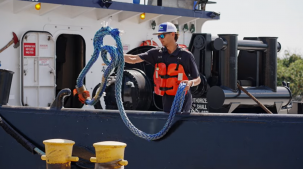
After a steep drop in activity that followed the Great Recession, the maritime industry is growing again...growth in trade is translating into growth in jobs. To read the full CNBC story, please click here.
Find out how a company founded by an Irish immigrant with a single sailboat went on to survive and thrive during a Civil War, two World Wars, the Great Depression, and all the while grow into one of the nation's largest marine towing and transportation companies. Happy 150th anniversary to McAllister Towing! Click here to learn more about the company's history in this Marine Log article.
Last week, the Transportation Security Administration began nationwide implementation of a highly anticipated program that reforms the unnecessarily burdensome process by which mariners and other transportation workers receive required Transportation Worker Identification Credentials (TWIC). The TWIC OneVisit program eliminates the requirement that workers make two trips to a TWIC enrollment center to pick up and then activate their TWIC.
From the Alton Telegraph..."Visitors to Grafton’s Towboat Festival had a chance to get an intimate perspective on tugboats. Mostly anyone who has driven the River Road or sat near the river has seen the powerful vessels at work hurrying cargo barges up and down the Mississippi. Very few of them have actually gotten to see the inside of one." To read the complete article, please click here.
AWO announced today that it joined the SmartWay® Transport Partnership, an innovative collaboration between the U.S. Environmental Protection Agency and stakeholders in the transportation industry that provides a framework to assess and improve environmental and energy efficiency of goods movement within supply chains. “This program is a natural fit for AWO and our member companies,” said Tom Allegretti, AWO’s President & CEO.