
LIFE LINES
Recreational Boater Safety

Safety Tips That Could Save Your Life
-
Avoid loading docks and “parked” or moored vessels in fleeting areas
There are many loading areas, or “terminals,” along the nation’s waterways. Swift currents in these areas can pull a boat under in seconds. Stay clear! -
Wear a life jacket at all times
Over 80 percent of those killed in boating accidents in recent years were not wearing life jackets. -
Don’t operate a boat while drinking alcohol or using drugs
It is estimated that more than half of all recreational boating fatalitiesare related to alcohol. It’s proven that the marine environment compounds the effects of alcohol. -
Watch for ship, tug or towboat lighting at night
Over Don’t rely on trying to hear a vessel approaching. Pay attention to the sidelights of tugs and tows, rather thanthe masthead lights (masthead lights are not displayed by pusher towboats on theWestern rivers, making it even more critical to keep a sharp lookout). If you see bothsidelights (red and green), you’re dead ahead, and in the path of danger. -
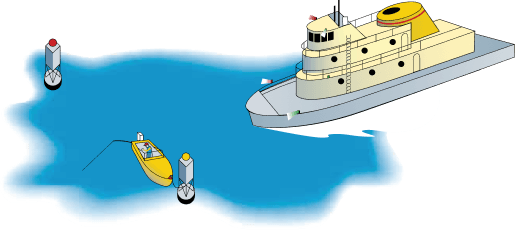
Use safe anchorages
Coast Guard navigation aids, like buoys, mark channels for shipping. It is illegal and dangerous to tie up to them. Each year commercial vessels collide with and sink boats anchored in navigation channels or tied to buoys.
A Checklist For Life
-
Drinking and boating are a deadly mix.
-
Designate a lookout, particularly for commercial traffic, both day and night.
-
Know the rules for visibility and abide by them, especially at night.
-
Avoid navigating in ship channels. Cross them quickly.
-
Five or more short whistle blasts mean danger.
-
If you have the equipment, listen to VHF channels 13 and 16.
-
Wear a life jacket, properly fitted and fastened.
-
Learn all the navigation rules and live by them.*
*The U.S. Coast Guard Navigation Rules are available from the U.S. Government Printing Office by calling (202) 512-1800.
What Recreational Boaters Should Know
-
Commercial vessels, including towboats and tugboats, operate 365 days a year, 24 hours a day.
-
The speed of a ship, towboat or tugboat can be deceptive. A tow can travel one mile in seven minutes—a ship even faster—and it generally takes 3/4 to 1-1/2 miles to stop. For example, if a water skier falls a thousand feet in front of a moving tug or tow, the skier has less than one minute to get out of the way.
-
Large vessels must maintain speed to steer, and they must stay in the channel — it’s the only place deep enough for them to operate. Many channels are unmarked. On some waterways, the channel extends bank to bank, so expect vessel
-
A pilot’s “blind spot” can extend for hundreds of feet in front of tugboats and towboats pushing barges.
-
In narrow channels, a tug’s or tow’s powerful engines can cause a smaller vessel to be pulled toward the tow when passing alongside.
-
“Wheel Wash” is a strong underwater current caused by towboat or ship engines that can result in severe turbulence hundreds of yards behind a large vessel.
-
“Wheel Wash” is a strong underwater current caused by towboat or ship engines that can result in severe turbulence hundreds of yards behind a large vessel.
-
A tug without barges in front could be towing a barge or other objects behind it on a long submerged line, which lies low in the water and is difficult to see. Never pass closely behind a tugboat.
-
Sailboating on inland rivers can be hazardous, and sailboaters and wind surfers should know that a tow or tug can “steal your wind”—so you won’t have the same wind you started with when executing a sailing maneuver near a commercial vessel.
-
Operating in adverse weather or low visibility can prove extremely dangerous. Why take a chance?
-
Ships, towboats and tugboats use VHF radio channels 13 and 16. If you are unsure of your situation, or their intentions, feel free to contact them. Remember, you are sharing the waterways with vessels operated by highly trained and conscientious professionals. If you have a true emergency, or need information, they can and will help if properly contacted.
What Recreational Boaters Can Do
-
For safety, stay out of the path of towboats and barges approaching bridges and locks
They must be lined up and committed to their approach well ahead, and it’s dangerous and difficult for them to change course. -
Designate a lookout
Assign one person in a recreational boat to look out, particularly for commercial traffic. -
Understand whistle signals
At least five or moreshort blasts on the whistle is the “danger” signal. Stay clear of vessels sounding the “danger” signal. -
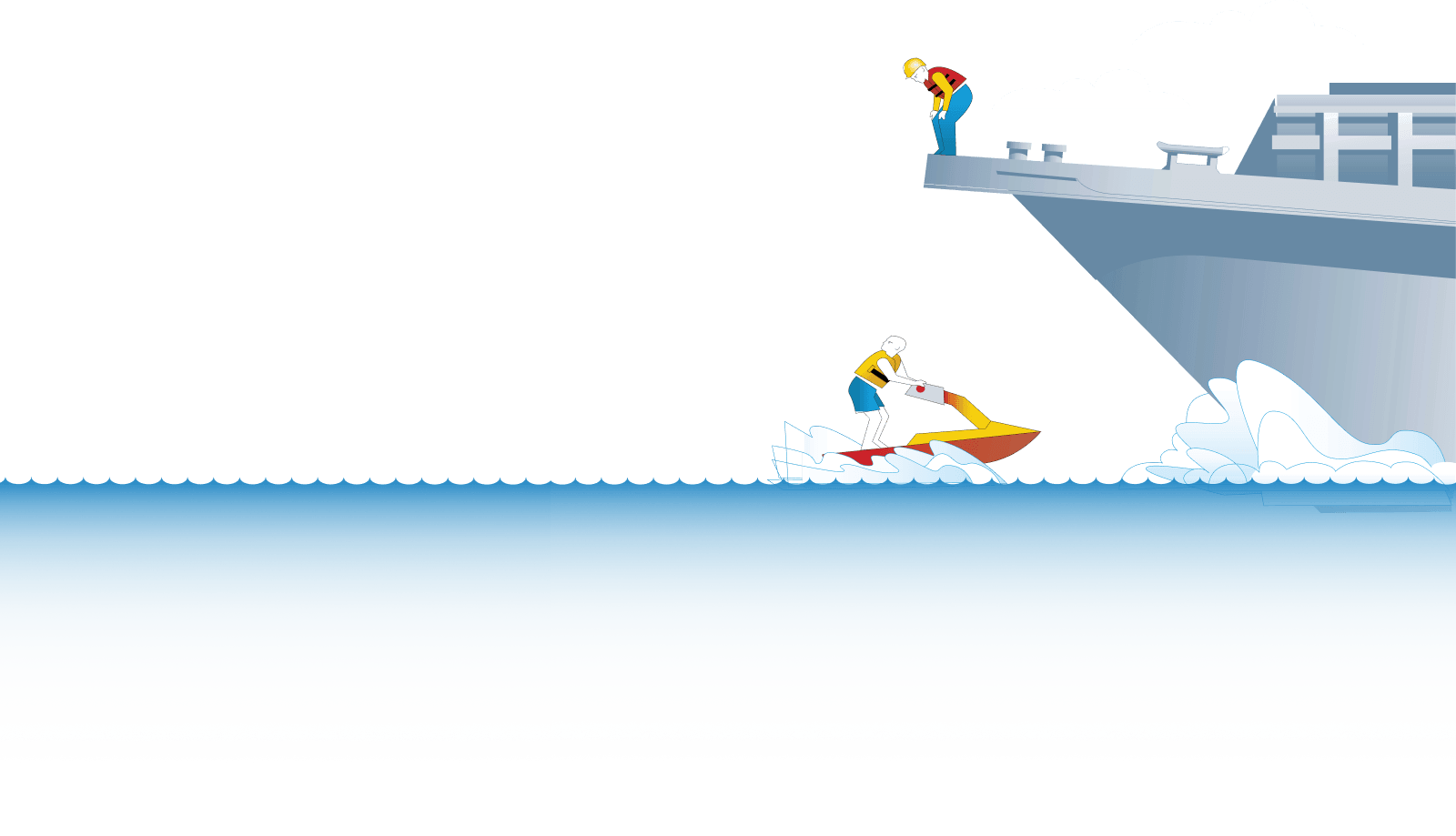
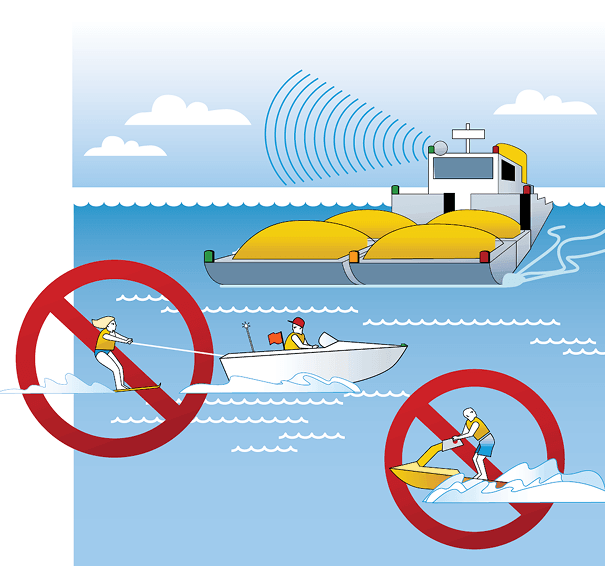
Don’t water ski or jet ski in and around tows
That’s a risk not worth taking. Jumping wakes, riding close alongside, or cutting under the bow or stern of a tug or tow could cause a boat or skier to be sucked through a towboat’s large propellers.
While our nation’s inland and coastal waterways play host to thousands of recreational boats,
at the same time, they also carry barges, tugboats, towboats and large ships loaded with tons of cargo.
Being aware of the constraints under which these commercial
vessels operate can arm recreational boaters
with the best protection against danger and could save your life!
This information is intended only as a supplement to other sources
of information on seamanship and
rules of the road. It assumes that you, the boat operator, know the rules and appropriate signals.
If you don’t, contact the United States Coast Guard concerning boating safety training.
Produced under a grant from the Aquatic Resources (Wallop-Breaux) Trust Fund administered by the U.S. Coast Guard