Navigating to Zero - July 2026
The AWO Coastal and Interregion Safety Committees recently hosted the 2026 Summer Safety Meeting in Chicago, bringing members and industry partners together for a program focused on preparedness, continuous improvement, and the challenges shaping safety across the tugboat, towboat and barge industry.
AWO President & CEO Jennifer Carpenter welcomed attendees with observations from a House Transportation and Infrastructure Committee marine safety roundtable she participated in the previous day on Capitol Hill. Joe Manion, Senior Director - Political & Legislative Affairs, followed with an update on AWO's advocacy priorities and the importance of the Jones Act to preserving safety on our nation's waterways.
Coast Guard Marine Safety Unit Chicago Commander T.J. Bigay took the stage next to discuss the Coast Guard's approach to risk management, safety promotion, and organizational learning on one of America's busiest and most complex waterways.
The program continued with a panel discussion about Subchapter M and third-party oversight, moderated by AWO Vice President - Regulatory Affairs Caitlyn Stewart. Jason Soutiere of ABS, Robert Keister of Sabine Surveyors, and Tava Foret of the Towing Vessel Inspection Bureau discussed opportunities to strengthen safety management systems through better management reviews, root-cause analysis, consistent regulatory interpretation, and continued investment in crew training. The panel also addressed recent Coast Guard policy changes and the importance of member feedback in identifying inspection inconsistencies.
The Ready for What's Next session shifted the focus to emerging operational risks. AWO Senior Director - Safety & Sustainability Michael Breslin discussed the growing exposure for vessel operators working with LNG, methanol, ethanol, lithium-ion batteries, and other emerging technologies through bunkering, cargo movements, vessel assistance, salvage response, and everyday equipment use. Jestin Hulegaard of Kluber Lubrication addressed environmentally acceptable lubricants and equipment compatibility, while AWO Manager - Government Affairs & Data Advocacy Brad Trammell highlighted funding opportunities, national laboratory partnerships, and AWO's work to help members evaluate emerging technologies.
The afternoon opened with recognition of Coastal Safety Leader Emeritus, Fairwater's Joel Morton, and a welcoming of the Coastal Safety Committee's incoming chairman, Paul Hendricks of Baydelta Maritime. Allison Fischman of the Bureau of Transportation Statistics took the stage with an update on the Safe MTS Program, followed by Jim Peschel of Vane Brothers, who presented on Overhead Operations Safety during Simultaneous Operations.
Coast Guard Marine Safety Unit Chicago Commander T.J. Bigay took the stage next to discuss the Coast Guard's approach to risk management, safety promotion, and organizational learning on one of America's busiest and most complex waterways.
The program continued with a panel discussion about Subchapter M and third-party oversight, moderated by AWO Vice President - Regulatory Affairs Caitlyn Stewart. Jason Soutiere of ABS, Robert Keister of Sabine Surveyors, and Tava Foret of the Towing Vessel Inspection Bureau discussed opportunities to strengthen safety management systems through better management reviews, root-cause analysis, consistent regulatory interpretation, and continued investment in crew training. The panel also addressed recent Coast Guard policy changes and the importance of member feedback in identifying inspection inconsistencies.
The Ready for What's Next session shifted the focus to emerging operational risks. AWO Senior Director - Safety & Sustainability Michael Breslin discussed the growing exposure for vessel operators working with LNG, methanol, ethanol, lithium-ion batteries, and other emerging technologies through bunkering, cargo movements, vessel assistance, salvage response, and everyday equipment use. Jestin Hulegaard of Kluber Lubrication addressed environmentally acceptable lubricants and equipment compatibility, while AWO Manager - Government Affairs & Data Advocacy Brad Trammell highlighted funding opportunities, national laboratory partnerships, and AWO's work to help members evaluate emerging technologies.
The afternoon opened with recognition of Coastal Safety Leader Emeritus, Fairwater's Joel Morton, and a welcoming of the Coastal Safety Committee's incoming chairman, Paul Hendricks of Baydelta Maritime. Allison Fischman of the Bureau of Transportation Statistics took the stage with an update on the Safe MTS Program, followed by Jim Peschel of Vane Brothers, who presented on Overhead Operations Safety during Simultaneous Operations.
The American Waterways HERO Award ceremony concluded the day's program, honoring rescues by AWO members Enterprise Marine, Northern Marine, Foss Maritime, Great Lakes Dredge and Dock, Tidewater Barge Lines, PSC Group, and Marquette Transportation.
AWO's Safety Committees and Subcommittees also met in Chicago to advance initiatives on multi-use waterways safety, safe vessel access, engagement with railroads on bridge safety, Towing Safety Management Systems, Subchapter M, the Responsible Carrier Program, and Coast Guard regulatory issues, as well as continued improvements to safety data and leading-indicator collection programs.
Throughout the meeting, one theme came through clearly: strong safety performance depends on more than compliance. It requires organizations to learn from experience, identify risks early, communicate across the industry, and continually improve conditions for American mariners.
To be a part of AWO's work to improve maritime safety and sustainability or for more information on the topics covered in Chicago, please visit AWO's member portal or contact Michael Breslin.
Congratulations to the Summer 2026 American Waterways HERO Award Winners!
The American Waterways Honor & Excellence in Rescue Operations (HERO) Award recognizes member company employees who demonstrate bravery, quick thinking, and selfless action in moments of crisis.
Know a crew that stepped up when it mattered most? Submit your nomination today on AWO's online form!
Correction: AWO mistakenly identified Baydelta Maritime as the operator of Foss Maritime Company's ITV Ava Foss in the HERO Award article from the June 2026 Safety Newsletter. We apologize for this mistake.
National Transportation Safety Board Marine Casualty Investigation Reports
The National Transportation Safety Board (NTSB) publishes investigation reports for marine, aviation, highway, railroad, pipeline, and hazardous materials incidents. Vessel incident reports released since the last edition of Navigating to Zero are summarized below.
NTSB MIR-26-21 - Fire aboard Towing Vessel William D
On April 22, 2025, at about 5:50 p.m. local time, the towing vessel William D was pushing two barges near mile 20 of the Victoria Barge Canal, about 15 miles from Port Lavaca, Texas, with six crewmembers on board, when a fire broke out in the towboat's accommodation spaces. Crew members attempted, but were unable, to extinguish the fire. All crew members evacuated the towboat to another vessel and were recovered by the U.S. Coast Guard. The Coast Guard, Port Lavaca Fire Department, and two assist tugs responded to the scene and the fire department extinguished the fire. There were no injuries and no pollution was reported. The towing vessel was deemed a constructive total loss estimated at $500,000.
The NTSB determined that the probable cause of the fire aboard the towing vessel William D was likely an unknown electrical source in the starboard main deck bunkroom. Contributing to the rapid spread of the fire and the extent of the damage was air introduced through open doors, windows, and other openings and the substantial use of combustible wood paneling throughout the accommodation spaces.
NTSB MIR-26-20 - Contact of Myra Eckstein Tow with Vicksburg Highway 80 Bridge
On May 5, 2025, at about 9:57 a.m. local time, the towing vessel Myra Eckstein, with a crew of 10 on board, was pushing 25 barges downbound on the Lower Mississippi River near Vicksburg, Mississippi, when the lead barge on the starboard side contacted a fixed pier of the Vicksburg Highway 80 Bridge at mile 435.8. As a result of the contact, five barges broke away; four were recovered and one sank. There were no injuries and no pollution was reported. Damage to the barges was estimated at $941,000.
The NTSB determined that the probable cause of the contact of the Myra Eckstein tow with the Vicksburg Highway 80 Bridge was the captain's inability to overcome the effect of high-water and high-current conditions on the tow and correct the tow's track, which was closer to the river's right descending bank than recent downbound tows, as the tow approached the bridge.
Coast Guard Reports of Investigation and Findings of Concern
The U.S. Coast Guard offers a monthly email to alert stakeholders about new Reports of Investigation and Findings of Concern, published on its Office of Investigations & Casualty Analysis website. To request alerts, email HQS-SMB-CG-INV.
RoI - 8194633 - 7/23/2025
Fall Overboard Resulting in the Loss of One Life from the Commercial Fishing Vessel GOOD GULF (O.N. 239264) While Conducting Shrimping Operations in the Gulf of America Two Nautical Miles South of Marsh Island, Louisiana.
RoI - 8126294 - 4/25/2025
Motor Vehicle Roll Off from the Barge Ferry CUMBERLAND II (O.N. 1244371) While Conducting Boarding Operations Resulting in the Loss of One Life on the Cumberland River near Cumberland City, Tennessee on April 25, 2025.
RoI - 6966090 - 6/1/2020
Loss of One Life While Recreationally Diving from the Small Passenger Vessel H2O BELOW (O.N. 1136903) at the USS ORISKANY Wreck Dive Site 24 Nautical Miles Southeast of Pensacola, Florida.
RoI - 7717011 - 7/23/2024
Sinking of the Uninspected Workboat LITTLE G (CG1818164) and Subsequent Loss of One Life While Holding a Deck Barge Against the East Bank of the Alabama River in the Vicinity of Mile Marker 9 near Tensaw, Alabama.
No New Findings of Concern
Coast Guard and Bureau of Safety and Environmental Enforcement Safety Alerts
The U.S. Coast Guard and the Bureau of Safety and Environmental Enforcement publish Safety Alerts on their websites on a regular basis. Alerts issued since last publication of the Navigating to Zero safety newsletter are listed below:
- USCG Safety Alert 11-26: Notice of Unmanned Maritime System Operations
- BSEE Safety Alert 520 - Inspect A2B Systems and Wire Rope Terminations to Prevent Crane Hazards
- BSEE Safety Alert 519 - Verify Riser Fin Retention Systems Before Prompts Riser-Handling Operations
- BSEE Safety Alert 518 - Mechanical Failure of LACT Pump Caused Fire
Stakeholders are urged to review these alerts in detail to enhance safety measures and prevent incidents. Please contact Michael Breslin for more information.
AWO Tracks Emerging Lithium-Ion Battery Fire Risks
As the marine industry continues to evaluate the fire risks associated with transporting battery electric vehicles (BEVs), vessel operators are exploring new ways to prevent, detect, and respond to lithium-ion battery fires. Thermal runaway can generate extreme heat, toxic gases, and rapid-fire spread, particularly on tightly packed vehicle decks, creating significant challenges for traditional shipboard firefighting methods.
While these challenges are most visible on vessels carrying BEVs, they are not limited to car carriers. Any vessel powered by, transporting, or routinely handling lithium-ion batteries may face similar hazards. Through participation in a Transportation Research Board (TRB) working group examining BEV and lithium-ion battery fire safety, AWO is staying close to new research, vessel design changes, and mitigation practices that may have broader relevance across the towing industry.
One recent example of innovative design is Hyundai Glovis' new Glovis Leader, which incorporates enhanced heat and smoke detection, battery-penetrating water lances, fire suppression blankets, and water-mist equipment.
In a recent communication with the TRB group, Dr. Yasuyoshi Tarao of ClassNK discussed the Glovis Leader and highlighted similar technologies such as NHE Connect for rapidly identifying developing incidents and the Rosenbauer RFC Battery Extinguishing System. Research shared with the group has also identified limiting EV batteries to approximately 30% state of charge during transport as a potential risk-reduction measure.
AWO will continue following this work and sharing lessons relevant to towing vessels, barges, terminals, and our members' other maritime operations. For more information, please contact Michael Breslin.
OCIMF Falls To Water Working Group Hosts Second Meeting
AWO opened the second meeting of the OCIMF Falls to Water Working Group with a presentation on the Safe Vessel Access Coalition, highlighting access challenges between inland barges and liquid terminals, relevant safety data, and the collaborative work underway with the International Liquid Terminals Association (ILTA) and TIC Council.
The OCIMF Working Group is developing a new industry publication focused on safe personnel transfer and the prevention of falls to water. AWO is helping shape the publication to ensure the unique operating environments and risks of the U.S. tugboat, towboat and barge industry are reflected in guidance.
The publication is expected to address a broad range of higher-risk operations, including midstream operations, ship-to-ship transfers, bunkering, barge operations, offshore and tandem mooring, mooring boats and crew launches, work near the vessel edge, and other activities that may expose mariners to fall to water hazards.
AWO's participation provides an important opportunity to bring U.S. vessel operators' experience into the development of international safety guidance while sharing lessons from AWO's own falls overboard prevention and safe vessel access initiatives.
For more information about the OCIMF Falls to Water Working Group or AWO's participation, please contact Michael Breslin.
NASBLA Launches New Waterway Management Resource Library
The National Association of State Boating Law Administrators' new Waterway Management Resource Library is now live, providing states, industry, and boating-safety partners with publicly accessible research, best practices, outreach tools, and educational resources addressing shared-waterway challenges. Developed by NASBLA's Waterway Management Task Force, the library reflects collaboration among government, commercial, nonprofit, public and private maritime stakeholders.
AWO participated directly in the task force, helping elevate tugboat, towboat and barge industry concerns involving recreational-commercial vessel interactions, navigation conflicts, situational awareness, and public education. The initial library also includes AWO multi-use waterways outreach and Lifelines safety materials.
Building on this partnership, AWO will continue working with NASBLA to engage state boating law administrators, including exploring opportunities to strengthen state boater-education tests with questions that improve recreational boaters' understanding of barges and towing vessels, blind spots, navigation rules, and safe interaction on multi-use waterways.
Members are encouraged to explore the library and share these resources locally: Visit the NASBLA Waterway Management Resource Library.
NSC Waterborne Transport Group to Meet in New Orleans October 6-7
The National Safety Council Waterborne Transport Group (WTG) will hold its fall meeting October 6-7 in New Orleans, bringing maritime safety professionals together to exchange lessons learned, discuss emerging risks, and share practical approaches to preventing vessel incidents and occupational injuries.
The WTG meets twice annually and includes professionals representing barges and towing vessels, tankers, cruise ships, offshore and research vessels, and other inland and ocean-going operations. Meetings combine presentations from maritime safety experts and government agencies with peer roundtables focused on best practices and real-world operational challenges.
AWO continues to participate in the group as part of our effort to bring tugboat, towboat and barge industry experience into national maritime safety conversations and bring useful practices and resources back to members.
AWO members receive 30% off the meeting ticket price. Members who are not currently NSC members can register by emailing divisions@nsc.org and identifying themselves as an AWO member to receive the discounted rate.
MARAD and Port of Long Beach Explore Nuclear-Powered Shipping
MARAD and the Port of Long Beach have signed a first-of-its-kind agreement to explore the use of small modular nuclear reactors (SMRs) for commercial vessels and potential shoreside applications. The effort represents another notable step in the Trump Administration's push to use nuclear technology as a means of Restoring America's Maritime Dominance.
SMRs could potentially support both vessel propulsion and terminal operations, although commercial maritime use remains largely untested and significant regulatory, safety, and public perception challenges remain.
For AWO members, the agreement is another reminder of how quickly the future-fuels landscape is expanding, providing opportunities and challenges for bunkering and energy transportation.
SOCP 2026 Conference Heads to Seattle
The Ship Operations Cooperative Program (SOCP) 2026 Conference, 33 Years of Innovation and Leadership at Sea: Technology, Trust, and the Human Element, will be held September 30-October 1 at Crowley's Seattle, Washington office.
This year's program will examine several issues shaping the future of maritime operations, including responsible maritime AI, AI-enabled safety management, emerging training technologies, industry innovation, accident and near-miss learning, human factors, and new approaches to recruiting, developing, and retaining highly capable mariners.
Sessions will bring together vessel operators, educators, regulators, technology providers, and other maritime leaders to share practical approaches for improving safety, sustainability, resilience, workforce readiness, and operational performance. To learn more and register, visit the SOCP website.
Falling Containers Damage Bunker Barge in Antwerp
Another example of the dangers associated with overhead operations during bunkering occurred in Antwerp, where four containers fell during loading operations at Antwerp Gateway, striking the bunker vessel Mati. The incident caused material damage and a minor oil leak, though no injuries were reported.
The event provides another reminder of the importance of coordinating simultaneous operations and ensuring suspended loads remain clear of personnel, vessels, and active bunkering equipment.
Safety Leader Focus - John Shkor
John has worked in the maritime industry for two decades. The Baltimore-area resident started sailing with Vane Brothers in 2009, gaining both deck and engine room experience before shifting shoreside in 2012 to become a Health, Safety and Environmental (HSE) Officer. He was promoted to HSE Regional Manager in 2019 and departmental manager two years later. In May, John was named Vane's Vice President, Regulatory Compliance and HSSE.
Tell us about a key safety initiative that Vane Brothers is focused on to reduce the risk of injuries and incidents.
This industry's greatest asset remains its qualified mariners, and recent crewing challenges highlight the need for internal training and career advancement programs. As part of these initiatives, mariners must receive proper training that promotes personal safety while also giving them a firm understanding of how to manage and protect their fellow crew members.
Vane Brothers' leadership team has made a sizable investment in mariner training. The company recently revised its Mate and Tank Barge PIC training programs, both of which facilitate the advancement of our existing crewmembers and thoroughly introduce new Vane mariners to the company's Safety Management System. Our Integrated Tugboat Mate Training program places candidates aboard a designated training tug, where they study under a senior Captain within the company. This dedicated training time provides a controlled environment for Mate Trainees to gain the skills and knowledge needed to safely and successfully manage their vessels and crew.
What are the key challenges your organization has overcome or is still working on to implement a strong safety culture?
In this constantly evolving industry, our resiliency is often tested. Economic shifts, company expansion, acquisitions, and a pandemic have required that we, together with our maritime partners, quickly adapt. Vane has grown steadily amid these challenges thanks to the tireless efforts of our mariners and leadership.
Recruitment and retention of qualified employees while preserving our strong safety culture requires that we not only continue to focus on hiring crewmembers who align with our core values, but that we also provide comprehensive onboarding and training along with reinforcing safety expectations through leadership engagement. Maintaining our commitment to safe operations during workforce transitions remains an ongoing area of focus.
Congratulations on the recent promotion! What advice would you give someone who is considering a career in maritime? How can we all better help people see the opportunity, purpose, and long-term career potential this industry offers?
I am often amazed by how many advocates use social media to positively showcase the essential work performed in the U.S. by tugs, towing vessels and barges. When my colleagues and I attend career fairs and hiring events, we hear excitement from job seekers with little or no prior knowledge of the industry other than what they have watched on YouTube. Those "influencers" who take the time to positively and safely highlight our industry often do so with little or no monetary return, but their passion for this profession is inspiring the next generation as well as those seeking a new career.
For anyone interested in entering this vast industry, my advice is to review online resources to determine which sector best suits their needs. Reach out to company recruiters and ask questions. Whether a candidate is prioritizing time with family, travel, or maximizing compensation, there is a sector of this industry that can provide the ideal balance.
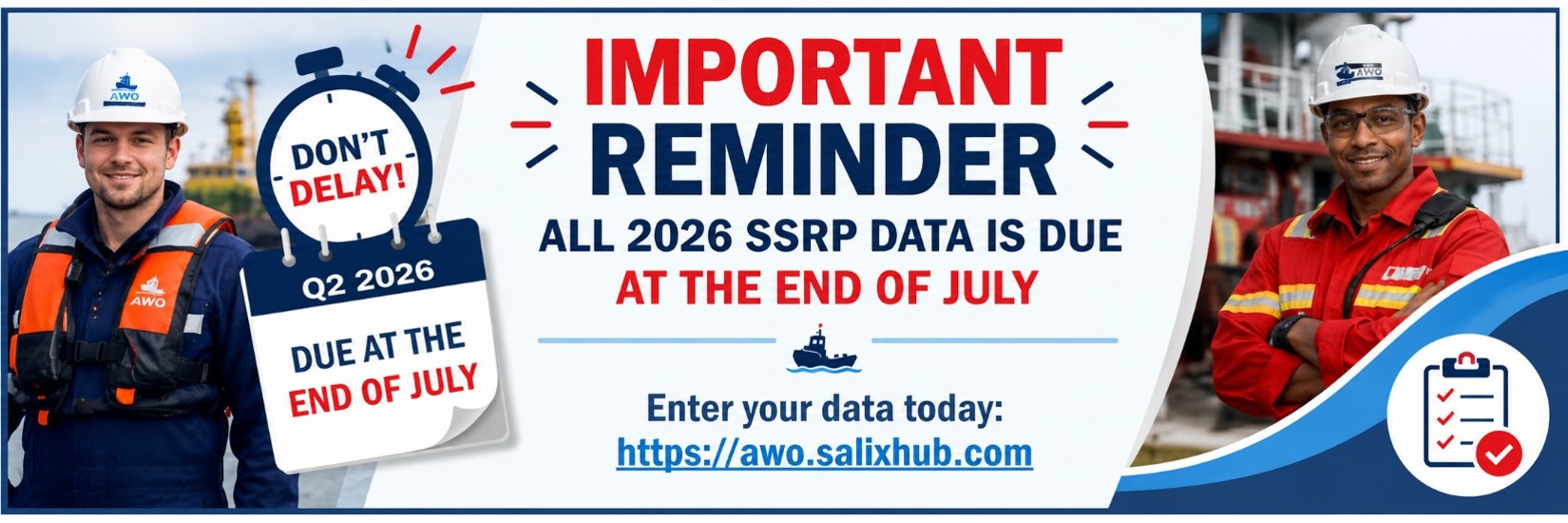
Safety Statistics Reporting Program Data for Q2 is Due!